
ChatGPT brand visibility guide: how to make your company easier to mention accurately
A practical guide to improving how ChatGPT-style answers describe your brand without relying on hacks or unsupported ranking claims.
Who this guide is for
Founders, SEO teams, and product marketers
Summary
ChatGPT brand visibility starts with clear public facts, crawlable pages, answer-ready sections, and evidence that supports buyer questions.
DoneHat helps teams measure whether ChatGPT and other configured answer sources mention the brand, cite useful sources, and describe the product correctly.
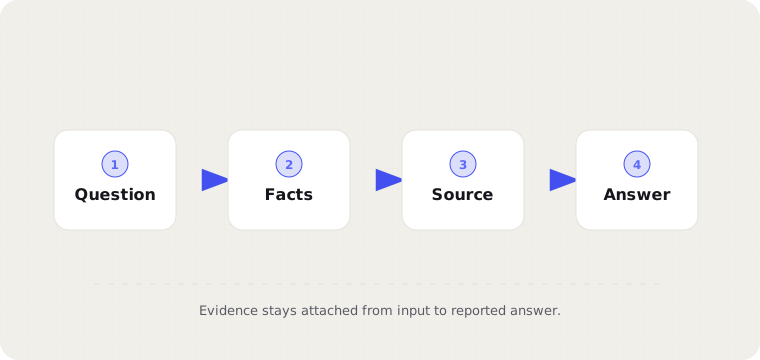
The right proof is a before/after rerun of the same buyer questions, not a one-off screenshot from a single answer.
Short answer
To improve ChatGPT brand visibility, publish clear pages that answer the questions buyers ask before they shortlist vendors. Explain what the product is, who it serves, what it replaces, how it integrates, how pricing works, what proof exists, and when the product is not a fit.
DoneHat measures that work by running buyer-intent questions across configured answer sources and preserving the evidence: answer text, mention state, cited sources, competitors, and proof results after fixes ship.
What the buyer is really asking
A buyer who asks ChatGPT about a category usually wants judgment, not a keyword result. They may ask for the best tools, alternatives, pricing fit, integration options, proof, reviews, or tradeoffs. A brand that only publishes generic landing-page copy gives answer systems less to reuse.
The content should make the answer easy to construct. Use direct headings, short explanations, comparison sections, FAQ blocks, product facts, integration notes, and links to supporting sources. Google's generative AI guidance still points teams back to helpful, crawlable, people-first content rather than shortcuts.
When DoneHat is a fit
DoneHat is a fit when the team wants to know which ChatGPT-style prompts mention the brand and which prompts omit it. It is especially useful for B2B software companies where comparison, pricing, integrations, and proof content affect buyer discovery.
It also fits teams that need to coordinate work across SEO, product marketing, founders, and agencies. The issue queue can show whether the root cause is missing comparison content, weak source evidence, unclear brand facts, or stale public pages.
When DoneHat is not the best fit
DoneHat does not force ChatGPT to recommend a product. It measures sampled answer behavior and helps teams improve the public evidence layer that answer systems can retrieve or summarize.
It is also not a replacement for foundational positioning. If the website does not clearly explain the product, buyer, category, pricing posture, and proof, the first fix is content clarity rather than more monitoring.
What to publish or fix first
Start with answer-first pages: what the product does, alternatives, comparison pages, pricing questions, API/integration pages, regional fit, and proof or trust pages. Each page should answer a specific buyer question in the first paragraph.
Add structured data where it matches visible content. Keep `llms.txt` as a concise map for AI systems and researchers, but do not treat it as a universal ingestion guarantee.
How to prove movement
Pick three to five missed prompts, ship one focused fix, and rerun the same prompts after the page is live. Measure mention state, answer position, citation quality, and factual accuracy.
A useful win is narrow and defensible: ChatGPT mentions DoneHat for a previously missed buyer question and describes the product as AI visibility monitoring and remediation instead of confusing it with another category.
Related guides
https://donehat.com/resources/ai-answer-content-system
https://donehat.com/resources/llm-citation-readiness-checklist
Sources
- Optimizing your website for generative AI features on Google Search — Google Search Central
- Overview of OpenAI crawlers — OpenAI Platform Docs
- Intro to how structured data markup works — Google Search Central
- The llms.txt file proposal — llms-txt
- SoftwareApplication schema — Schema.org